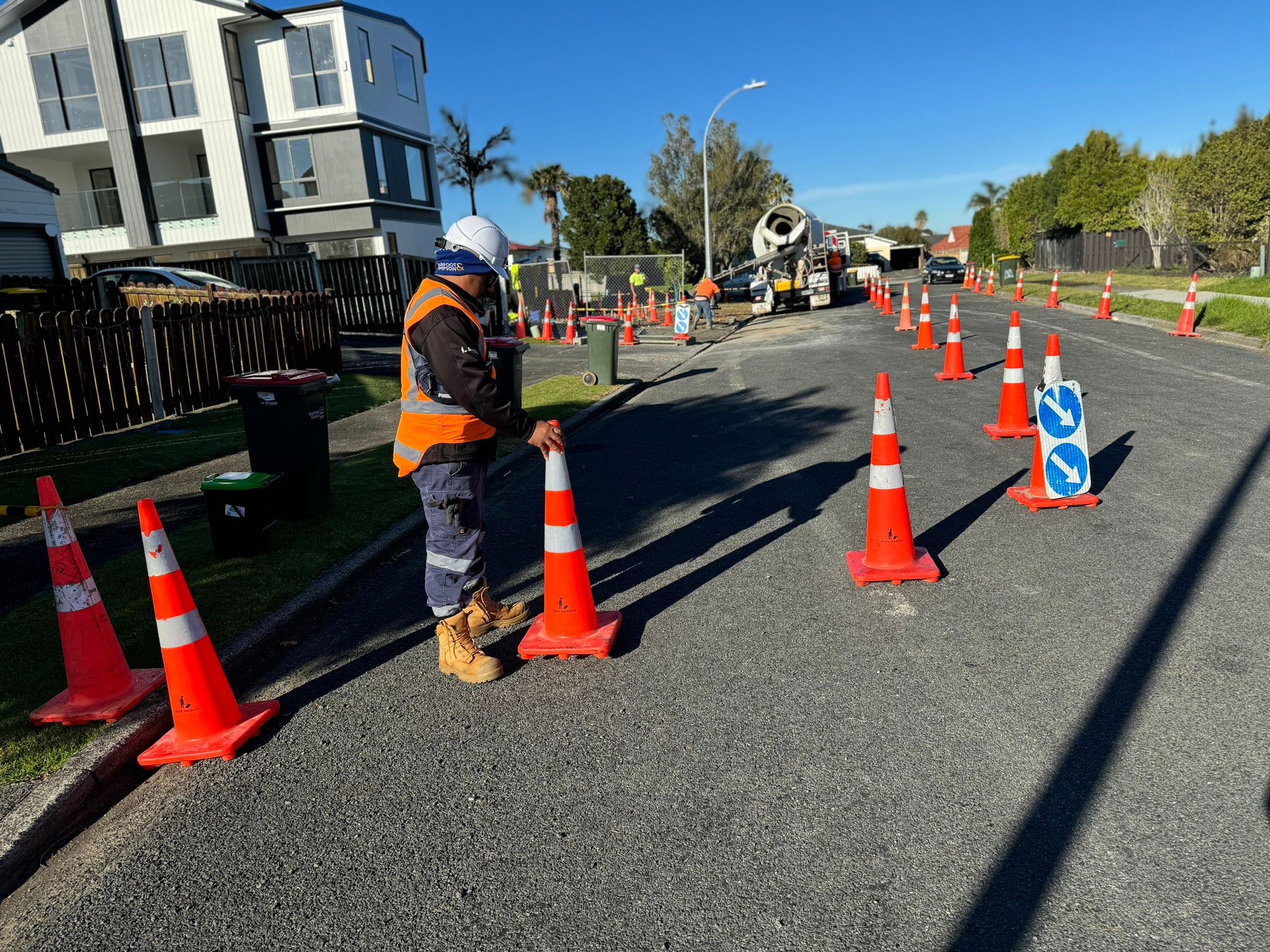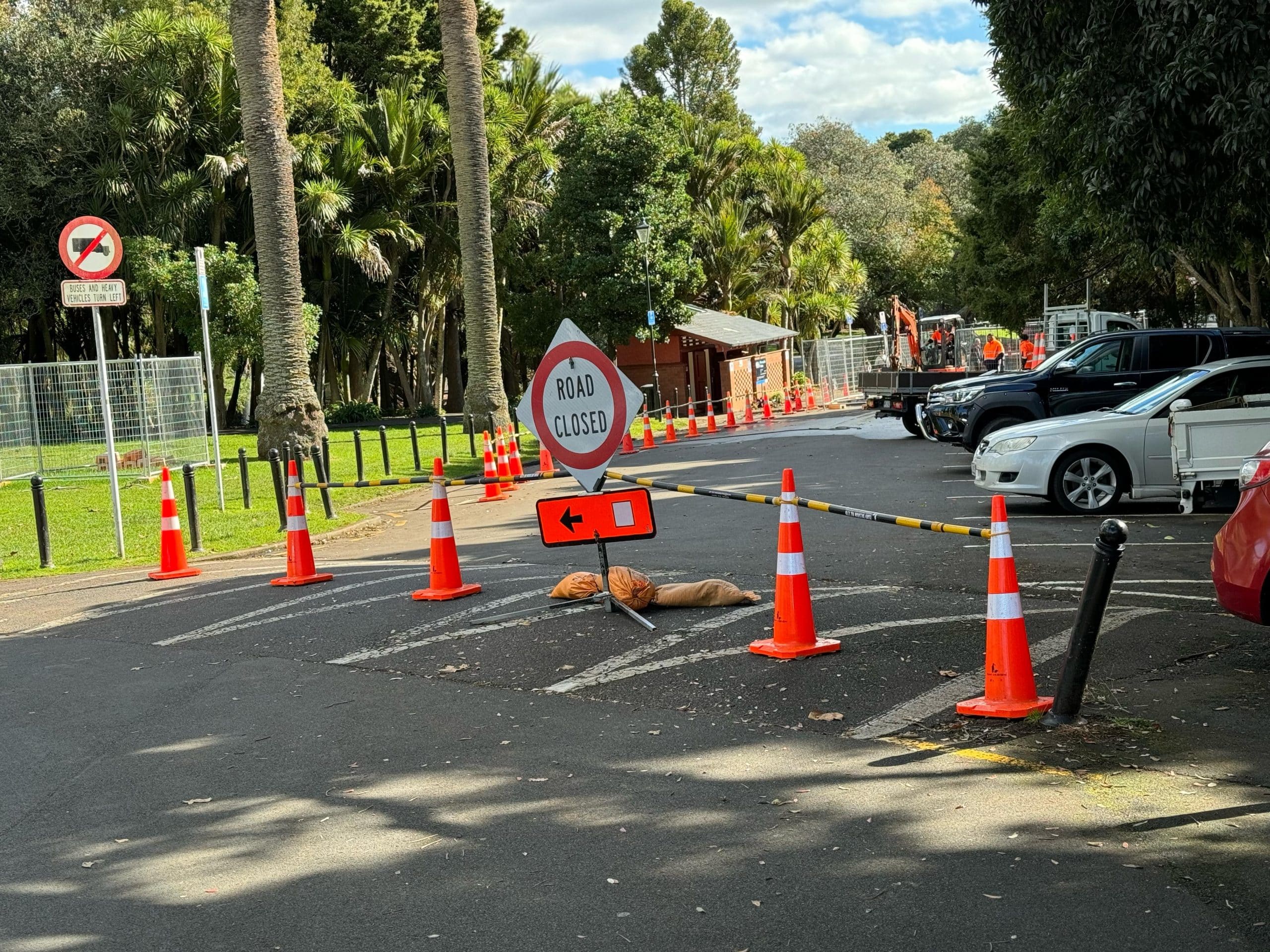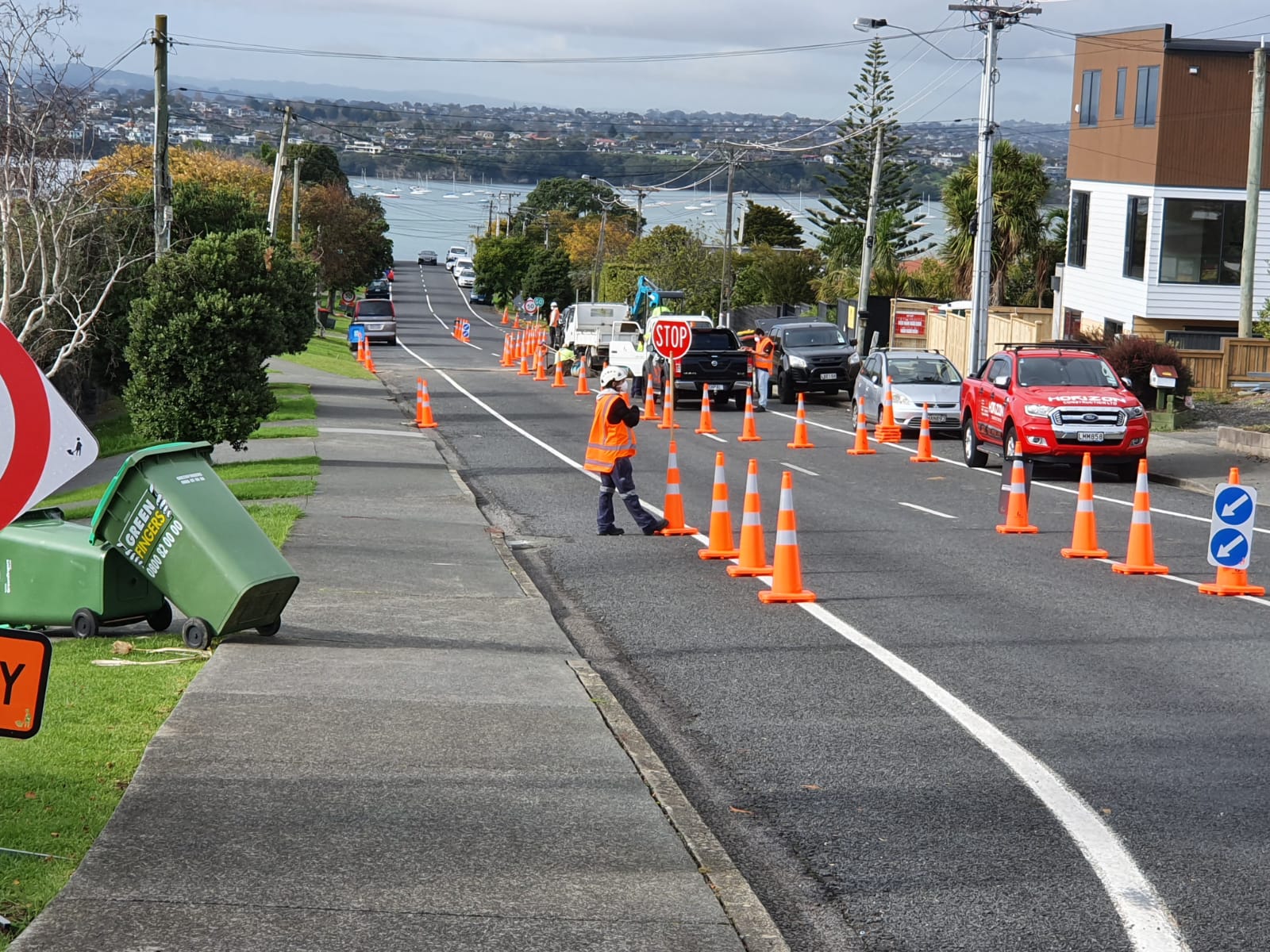

Temporary works on or near roads create safety risks for workers and the public. Temporary Traffic Management plays a vital role in controlling these risks by managing how vehicles, pedestrians, and cyclists move around active worksites. In New Zealand, effective traffic control is essential for maintaining safety, minimising disruption, and meeting authority expectations. For the remainder of this guide, TTM will be used as the abbreviated term.
One of the primary purposes of Temporary Traffic Management is to reduce the risk of accidents at worksites. Construction zones often involve heavy machinery, reduced visibility, and altered traffic flows. Without proper controls, these environments can become dangerous for both workers and passing road users.
TTM provides structured measures such as lane closures, signage, barriers, and traffic controllers to clearly separate work areas from live traffic. These controls help guide drivers safely through or around worksites while giving workers a protected operating space.
In New Zealand, Temporary Traffic Management is developed in alignment with the New Zealand Guide to Temporary Traffic Management (NZGTTM). This guide provides nationally recognised principles for safe and consistent temporary traffic control across all types of worksites.
NZGTTM supports best practice by outlining:
Following this guidance helps ensure Temporary Traffic Management arrangements are suitable for local road environments and meet the expectations of road-controlling authorities.
Poorly planned traffic control can cause congestion, confusion, and complaints from the public. Temporary Traffic Management helps minimise disruption by planning traffic movements in advance and maintaining clear communication with road users.
Effective TTM considers peak traffic hours, pedestrian access, nearby businesses, and emergency vehicle routes. By anticipating these factors, worksites can operate more efficiently while maintaining positive relationships with the surrounding community.
Each worksite is unique, but traffic control principles must remain consistent. Temporary Traffic Management provides a structured framework that ensures safety standards are applied uniformly, regardless of project size or duration.
Using consistent signage, layouts, and control measures helps road users quickly recognise and respond to temporary traffic conditions. This consistency reduces driver uncertainty and improves overall road safety around worksites.
Even the best traffic plans are ineffective without competent implementation. Temporary Traffic Management relies on trained personnel who understand traffic behaviour, hazard identification, and safe work practices.
Certified traffic controllers and supervisors ensure that traffic controls are installed correctly, maintained throughout the project, and adjusted when site conditions change. Proper training significantly reduces the likelihood of incidents caused by human error.
At its core, Temporary Traffic Management exists to create a safe interface between construction activities and live traffic environments. By combining planning, physical controls, and trained personnel, TTM ensures that worksites operate safely while maintaining access and flow for the public.
A well-executed TTM approach not only protects lives but also supports project efficiency, compliance, and professional credibility within the construction industry.
In addition, effective TTM supports smoother coordination between contractors, councils, and emergency services. Clear traffic controls reduce confusion on site, improve response times during incidents, and help maintain public confidence throughout the duration of the works.
Temporary Traffic Management is a critical component of safe and compliant worksites across New Zealand. When implemented correctly, TTM protects workers, safeguards road users, reduces disruption, and supports regulatory approval processes. Investing in proper traffic control planning and execution is not just a legal requirement—it is an essential responsibility for every organisation operating on or near public roads.